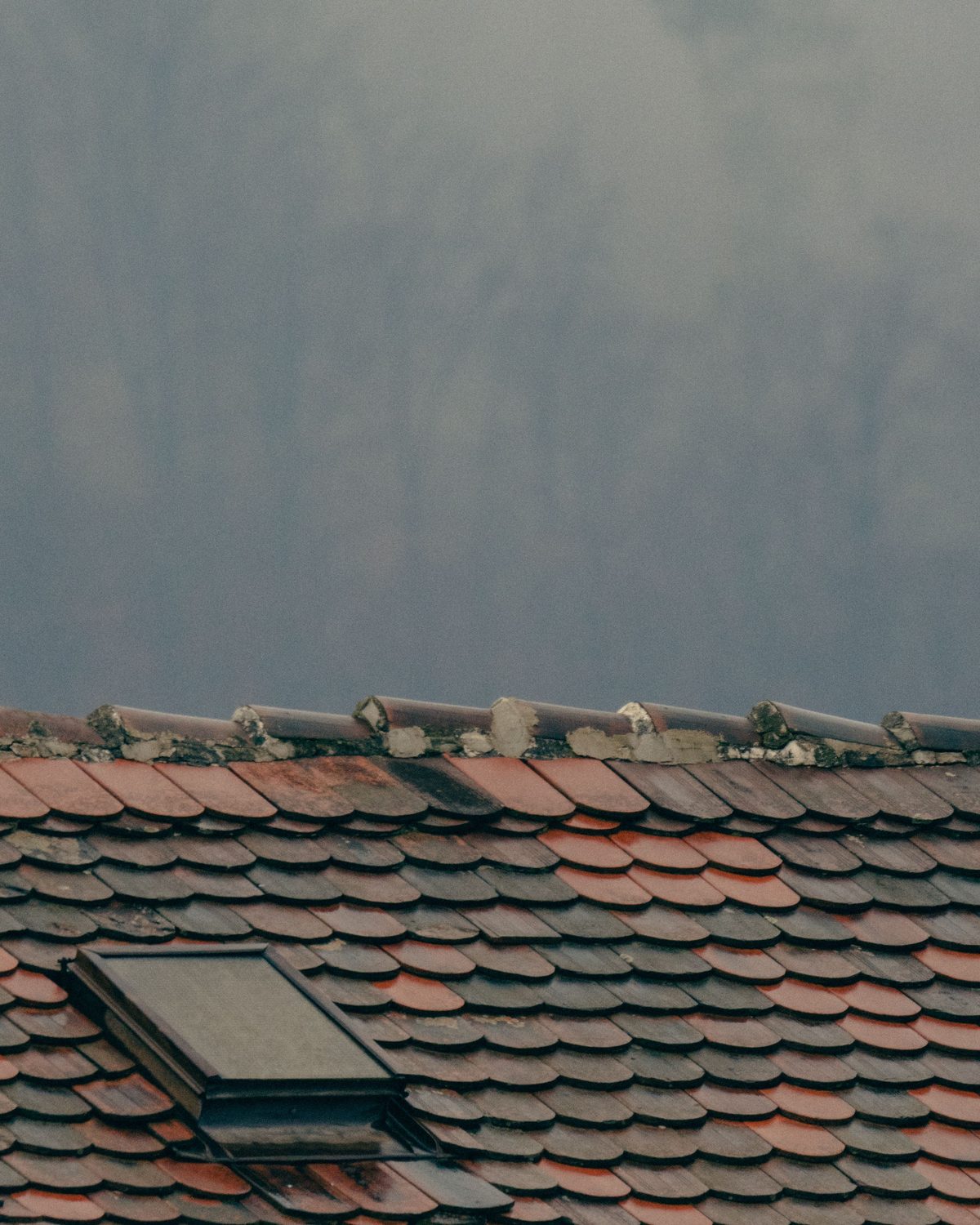
Boulder City is older and smaller than the valley, and the roofs follow. Houses that have been covered more than once, storefronts and small offices, lodging, light industrial units and buildings that have changed use since they went up. An inspection here starts with a question the newer parts of the valley rarely ask: what is actually on this roof already?
Layers nobody wrote down
On older property the covering you can see is rarely the whole assembly. Underneath it there may be an earlier roof, insulation of unknown age and a deck that could be wood plank, lightweight concrete or metal. Very little of that history exists on paper. Owners change, contractors close, and a repair done twenty years ago leaves nothing behind but the repair.
That makes the inspection an exercise in reading evidence rather than reciting a specification. The edges of the assembly at eaves and rakes, the way a flashing was terminated, the mismatch between one patch of covering and the next, and the condition of what shows at an existing penetration all say something about how many times the roof has been worked on and how carefully. Where the answer genuinely decides the recommendation, and only then, the roof is opened in a few agreed places with your permission and closed the same day.
What an older roof shows when you look under it
Small buildings put almost all of their risk in the perimeter. Masonry parapets are common on the commercial stock, which moves the weak point to the coping and the through wall detail, and water that gets behind a parapet runs down inside the wall and appears on a ceiling nowhere near where it entered. That is how these buildings produce leaks that do not look like roof leaks at all.
Drainage is usually a scupper through a parapet rather than an internal drain, which means one opening carries the whole roof, often with nothing behind it if it blocks. On the housing, older shingle shows its age in granule loss, curling and brittleness, and early tile roofs are on their second or third underlayment rather than their first. Past repairs get their own attention. A flashing caulked over instead of reworked is a repair that was never a repair, and it is one of the most reliable leak sources we find here.
One trip, a short street and the city
Access is generally straightforward. Buildings are low, roofs are reached by ladder or hatch from a rear lot or an alley, and houses need little more than an unlocked side gate and a dog indoors. The constraint is usually the occupant. A single business fills the whole building and cannot clear out for the day, so a visit is planned around opening hours rather than dropped into them.
Distance is the other thing worth planning. Boulder City is a drive from the middle of the valley, so if you have more than one property here, book them together and we will do them on one trip. Both commercial and residential property is covered, and the reports are written to the same standard either way.
If the report leads to work, permits go through Boulder City rather than Clark County, and the record of any earlier work sits with the city too. Buyers should ask for it. See the pre purchase inspection page for what to request from a seller, pick a time on the booking form, and check the rest of the areas we serve.
Common questions
The house has been reroofed more than once. Can an inspection tell what is up there?
Largely yes, and where it cannot it says so rather than guessing. Older property here has often been covered more than once, with paperwork missing or describing a roof that has since been replaced.
- At eaves, rakes and any open detail the edge of the assembly shows
- Layer count, material and the condition beneath can usually be read there
- Penetrations, valleys and flashings show whether the last job was finished
- The deck is what nobody can see, and it changes the answer most
A deck damp at a wall for years is a different job from a sound one with a single wet area, and that is not visible from the surface. Where you want certainty, opening the roof in a few agreed places is the honest method, with your permission and closed the same day.
There is an evaporative cooler on the roof. What does the inspector look at?
Where the water goes, before anything else. A cooler is the one thing on a roof meant to put water there, through a feed line, a bleed or a drain, while vibrating whenever it runs.
- Water bled onto the covering keeps one patch damp all season
- That softens and stains the surface and stands out clearly
- Then the curb or stand, the base flashing and the line penetration
- Legs set straight onto a low slope surface abrade it
- On tile, cracked tiles cluster wherever the service route runs
The equipment is often older than the surface it stands on, and each part of it is either an opening, a permanently damp area or a detail being worked loose. All of it is photographed, because this is the part of a roof visited most often and looked at least carefully.
Boulder City has its own building department. Does that change what we ask a seller for?
It changes where the records live, which is what matters to a buyer. Boulder City is incorporated with its own building department and its own ordinances, so permits go through the city rather than Clark County.
- Work on a building here leaves its record with the city
- A seller describing a reroof either has a permit behind it or not
- Ask for invoices, the contractor name, the scope, the permit and sign off
- Ask for warranty documents and whether they transfer
Then have what you were told compared against what is actually on the roof, because work described as a full replacement and delivered as a patch is better found before closing. Since the city writes its own ordinances, anything changing a building's appearance is worth a call to the city first.
Is it worth having the house and our shop looked at on the same visit?
Yes, and out here it is the practical way to do it. We cover commercial and residential property to the same standard and report in the same format, and Boulder City sits far enough out that grouping visits makes sense.
- The reports stay separate, because the two answer different questions
- On the house, the layer under the covering and the wall details decide
- On the shop, systems on the deck, dry insulation, parapets and scuppers
- Read side by side, they give you a spending order across both
Say at booking if you own or manage more than one property here and we will plan them together rather than as separate trips. Tell us in advance about anything affecting access: a roof reached through a tenant space, an alley a lift has to stand in, or opening hours.