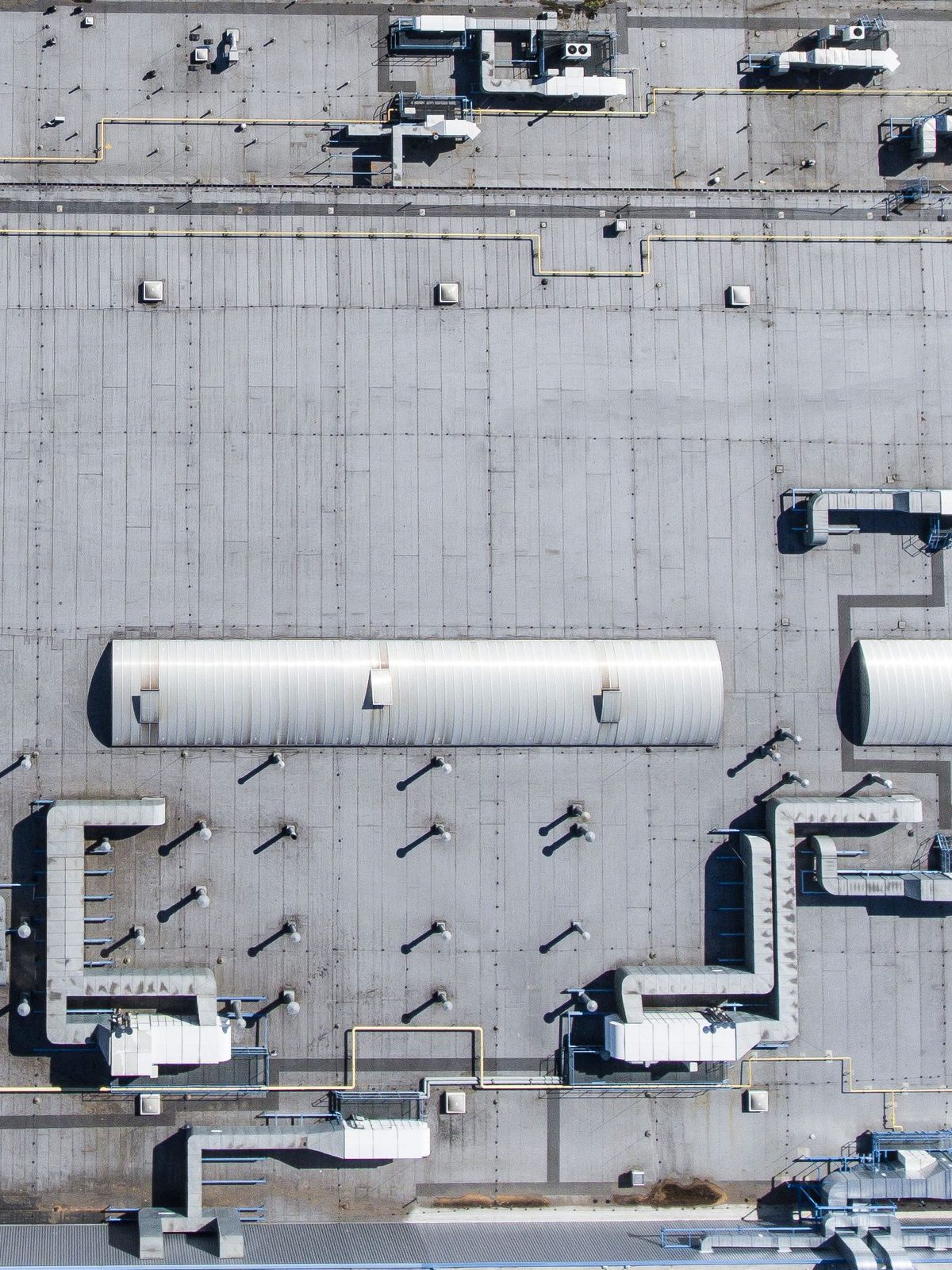
Spring Valley puts retail centers, self storage, apartment property and housing along the same streets. Almost none of it is one large roof, and a good deal of it is somebody’s home sitting above somebody else’s lease.
Count the roofs before anyone goes up
The first useful thing an inspection does here is establish how many roofs there are. A retail center is one address and often several roof sections at different levels, finished in different years, with a wall or a parapet between each. An apartment property is a dozen or more separate buildings plus the structures nobody lists. A storage site is a row of long metal buildings behind one gate. Portfolios in Spring Valley routinely turn out to hold more roofs than the schedule says, and a budget built on the building count is short before it starts.
Small roofs also behave differently from large ones. On a warehouse the open field is most of the roof. On a pad building the perimeter, the curbs and the penetrations are most of it, so almost all of the risk sits in details that were made by hand and then left to move in the heat.
What each covering here shows
Three coverings turn up within a block of each other, and each one fails in its own way.
Low slope membrane on the retail and office buildings shows its history at the equipment. Every tenant who ever occupied a unit added a rooftop unit, a condensate line, a gas line or a conduit run, and very little of what the last one installed was ever removed. We find units connected to nothing, curbs with a plate screwed over the opening and cut conduit left open. Those go on the report first, along with crushed insulation on the route the service technicians walk.
Metal panel on the storage buildings fails at the fastener line and the laps, and the leak appears a long way from where the water got in.
Tile and shingle on the housing and the apartment buildings come back to the layer underneath. On tile the underlayment does the waterproofing and ages from heat, so we lift rather than judge from above. Our annual maintenance inspection page covers the version of this you repeat each year.
Getting on a roof when somebody is underneath it
Access here is usually the easy part. Buildings are low, hatches and ladders reach most roofs from a service door or a rear lot, and a lift can normally stand in the parking area. What has to be arranged is everything on the ground.
On a trading center that means customer parking and delivery hours, and a tenant who should hear about the visit before seeing somebody on the roof through the skylight. On an apartment property it means resident notice, gate access and the parking spaces that come out of use. On a storage site it means gate codes and drive aisles. Tell us which of those applies when you book and the visit gets planned rather than improvised.
One point on paperwork. A Spring Valley address usually carries a Las Vegas mailing address, but permits and inspections go through the Clark County building department, so anything a report recommends is filed with the county. Confirm the office by the address rather than by the envelope.
Pick a time on the booking form, for commercial property and for houses, and see the rest of the areas we serve.
Common questions
We own an apartment property in Spring Valley. Does one report cover every building?
One report, organized one building at a time inside it. An apartment property here is usually separate buildings under a single owner, plus carports, a clubhouse, a laundry or mail structure and sometimes a shed.
- Each of those is a roof with its own age, covering and condition
- Rolled together they produce a document nobody can act on
- So findings and ratings sit under each building, with a ranking summary
- Start the count from the site plan, not the unit schedule
The structures left off a list are exactly the ones nobody has looked at. Record the covering type per building too, since a property built in phases carries different materials aging on different timetables. Tell us where work has already been done and send the paperwork, because comparability is the point of doing it all at once.
What does an inspection find on a self storage roof that a walk around would miss?
Most of it, because the failures on a metal panel roof are small, repetitive and invisible from the ground. Nothing about that kind of roof fails dramatically, it fails one fastener at a time.
- Shallow pitch panels on exposed fasteners, joined at side and end laps
- Daily expansion backs fasteners out and flattens the washers under the heads
- End laps work apart the same way, and each becomes a small opening
- On long buildings water travels far before it shows, so complaints mislead
Gutters are the second half, filling with grit through dry months and overflowing under the eave in the first storm. So the inspection walks the fastener lines, the laps, the ridge and eave closures and the gutters, recording positions precisely enough to find again. What sits underneath belongs to somebody else, which makes a small leak expensive.
We lease a retail unit here. Should the landlord or the tenant commission the inspection?
Read the lease first, because it decides who pays and often who is allowed on the roof. In most retail arrangements the roof is the landlord's to maintain and the tenant's problem when it leaks.
- The argument that follows is about which of those is happening
- A report helps both sides, with photographs, locations and causes
- Equipment installed for a fit out belongs to the story either way
- Units, condensate lines, gas lines and conduit are openings made by hand
Those are the commonest source of what a shop owner experiences as a roof leak, often made by a contractor who was there for the equipment. We inspect for whoever engages us, so tell us at booking who owns the roof, who owns the equipment and who will read the report. Either way, the other party has to be told.
We are buying a condominium here. Is the roof ours to inspect?
Usually not yours to own, but very much worth knowing about. In most condominium arrangements the roof is common property maintained by the association and funded from reserves, so you are buying a share of what it will cost.
- That makes it a budgeting question rather than a repair question
- It reaches you through assessments, not a contractor's invoice
- Ask for the association documents during your review period
- Read the reserve study for when the roofs were last done
- Where permitted, an inspection shows if the building is ahead of that schedule
Then ask whether the board has had a recent condition report, because a reserve study built on age alone is an estimate while a condition report is evidence. Access has to come from the association rather than the seller, so start that conversation as soon as your offer is accepted.