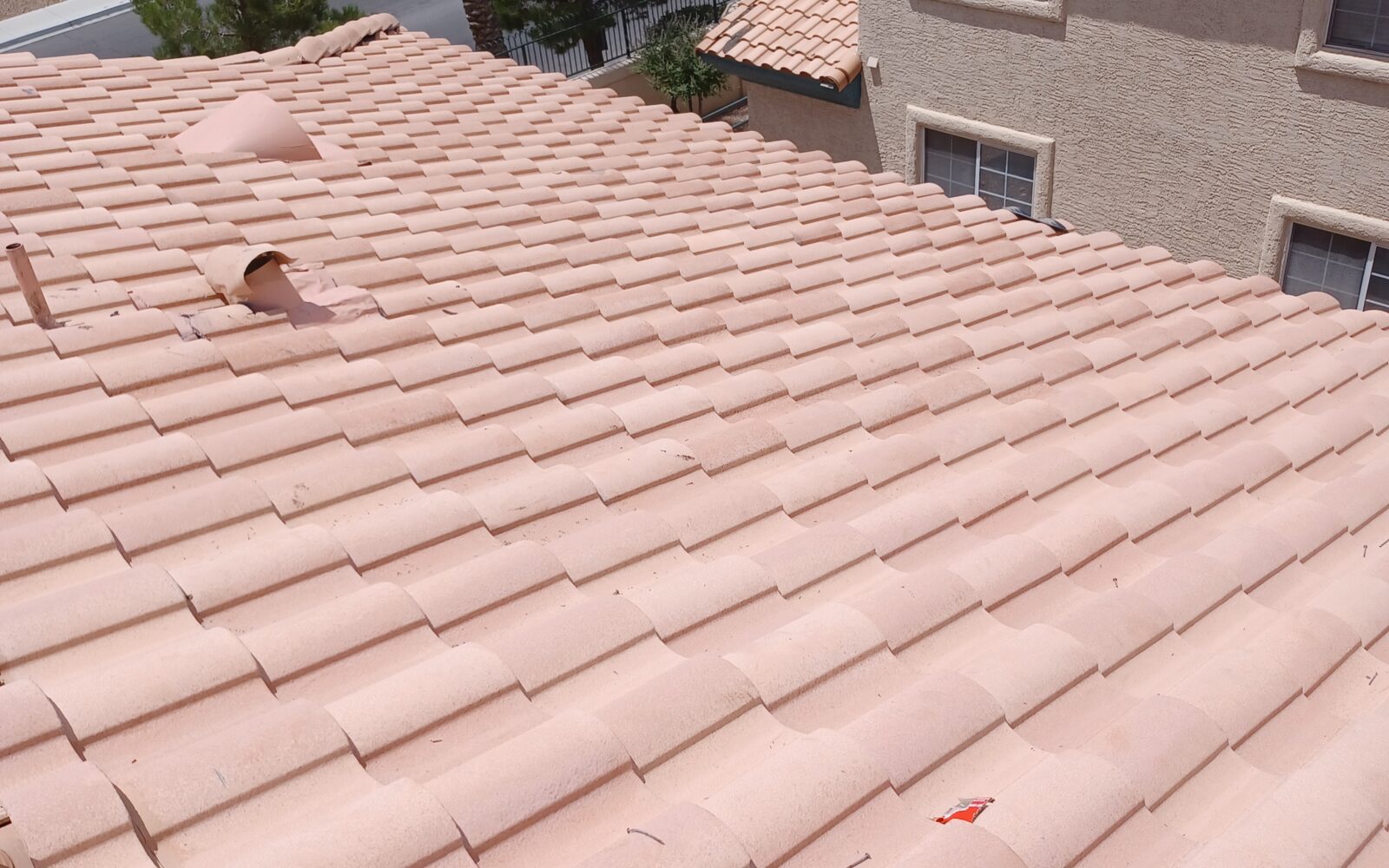
A residential roof inspection from PRS is a walk of every roof on the property, each finding photographed and located, and a written report that says what needs doing, what can wait and what is simply the age of the roof.
Most houses here have more than one roof, and that is where a lot of inspections go wrong. The main roof, a flat section over an addition, a patio cover and a detached garage are routinely different ages and different materials. Rating the property as one thing hides whichever of them is actually the problem.
What we check
The details first. Valleys, flashings, vents, pipe boots, skylights and every junction with a wall. Houses do not leak in the middle of a slope. They leak where the roof stops and something else begins, and those joints are worked hard by the daily temperature swing here.
Drainage. Gutters, scuppers, low spots on any flat section, and anywhere water sits. Rain arrives fast and in volume during monsoon season, and anything that cannot clear it quickly backs up and finds the weakest point.
The covering. Cracking, curling, chalking, brittleness, slipped or broken tile, and damage from anyone who has been on the roof. This is also where heat damage shows, and heat damage looks like nothing much until it looks like a leak.
The attic, when there is something to trace. Water runs along framing and decking before it reaches a ceiling, so the stain is rarely under the hole. Going inside is how the entry point and the symptom get connected, and it is why a thorough inspection often takes longer than people expect.
Tile, which is most of the valley
If the house has a tile roof, the important layer is the one you cannot see.
Tile is a shield. The underlayment beneath it is the waterproofing, and in this climate it dries out and becomes brittle decades before the tile shows any age at all. A tile roof can look completely settled from the street and be at the end of its service life.
So on a tile roof we lift tiles in representative places to look at the underlayment directly. An inspection that counts cracked tiles and stops has not answered the question. What a tile roof inspection covers goes into it properly.
What you get
A written report with each finding described in plain language, photographed close up and placed on a plan, with a condition rating and an order of priority.
It is written to be handed to someone. A contractor should be able to quote from it without going up again. An agent or an adjuster should be able to read it without a roofer translating.
And it says what to leave alone. A roof with years left will still produce a list of findings, and most of that list does not need money this year. Separating the two is the point.
What previous repairs tell us
Say what has been done to the roof before, even informally, because it changes where we look first.
A patch applied by a handyman five years ago is not necessarily a problem, and it is always informative. It marks a spot that leaked once, which is the spot most likely to leak again, and it tells us something about how the roof has been looked after.
The same goes for anyone who has been on the roof for a reason unrelated to roofing. Solar installers, satellite fitters, air conditioning technicians and cable crews all leave marks, and on a tile roof they leave broken tiles that nobody reported. Those are cheap to put right now and expensive to leave.
If you inherited the house and have no idea, say that too. It is a perfectly normal answer and it simply means the roof itself has to tell us the history.
If nothing is leaking
That is the best time to have one, and the cheapest.
Roofs here do not usually fail suddenly. Heat and ultraviolet work on them through every summer, quietly, and by the time water comes through, the condition behind it has been developing for years. A problem found at that stage is often still a repair. Found later it is a replacement.
There is also a record worth building. A dated inspection with photographs is what distinguishes storm damage from ordinary wear when a claim is assessed, and that distinction is almost impossible to argue after the fact.
Across the valley
Las Vegas, North Las Vegas, Henderson, Summerlin, Spring Valley, Paradise, Green Valley, Aliante and Boulder City, with Pahrump, Mesquite and Laughlin covered as well. The full list is here.
Tell us the address, roughly how old the roof is, what it is made of and whether anything is leaking now, and we will give you a date and a figure.
Next: what a roof inspection costs here and what moves the price.
Common questions
What does a residential roof inspection include?
A walk of every roof on the property, the details examined individually, drainage checked, and the attic looked at where there is a stain to trace. Then a written report with each finding photographed, located, rated and put in order of priority.
- Every roof area on the property, rated separately
- Valleys, flashings, vents, boots and skylights
- Gutters, drainage and anywhere water sits
- Attic or interior access when something is leaking
- A ranked list rather than an undifferentiated list of faults
The ranking is the genuinely useful part. Almost every roof produces a list of findings, and most of that list does not need acting on this year or even next. Separating what cannot wait from what is simply the age of the roof is the difference between a report you can build a budget from and one that only makes you worry about a house you were perfectly happy with yesterday.
Do I need to be home for the inspection?
Not for all of it. It helps to be there at the start so we know how the roof is reached and whether there is anything you have noticed, and at the end so we can tell you what we saw. The written report follows afterward with the photographs.
- Access to the roof is the main thing we need at the start
- Attic access is needed only where there is a stain to trace
- Tell us about any leak, however small or occasional
- Previous repairs are worth mentioning, especially informal ones
- The report arrives after the visit, not at the door
The two most useful things you can tell us are where you have seen water and what has been done to the roof before. A patch somebody applied five years ago, or a trade who was on the roof for something unrelated, both change where we look first and both are invisible from above.
My roof is not leaking. Is an inspection still worth it?
Usually yes, and this is the cheapest point at which to have one. Roofs here age through heat and ultraviolet rather than failing dramatically, so by the time a leak appears the underlying condition has usually been developing for several years.
- Heat damage is gradual and invisible from the ground
- A small problem found early is a repair, not a replacement
- A dated record is what supports a future claim
- It tells you what to budget for, which is worth knowing
- Finding nothing wrong is a useful answer too
The common pattern here is an owner who has never had the roof looked at discovering at the point of sale, or at the point of a claim, that it is older than they thought. Both are bad moments to find out. An inspection on a roof with years left is not wasted money; it is the thing that lets you stop thinking about it.
What if you find something serious?
We tell you what it is, where it is, what is causing it and how urgent it is, with photographs. Then we tell you what we would do about it and roughly in what order. What we will not do is turn one finding into a case for replacing the whole roof.
- Causes are identified, not just symptoms
- Urgency is rated so you can sequence the work
- The report is written so other contractors can quote from it
- You are free to take it elsewhere, and some owners should
- We will say plainly when a finding is age rather than damage
A roof with a failed flashing and a roof at the end of its life both leak, and they need completely different responses. Telling them apart is most of the value of the visit. If the honest answer is that one detail needs fixing and the rest of the roof is fine, that is what the report will say.
How soon can you come out?
Most of the valley is a short drive, so scheduling is usually a matter of days. An active leak moves to the front, and so does storm damage, because the evidence in both cases gets harder to read the longer it is left.
- Las Vegas, Henderson, North Las Vegas, Summerlin and the rest of the valley
- Active leaks and storm damage are prioritized
- Escrow deadlines are worth saying when you first call
- After a storm the whole valley books at once
- A larger property needs a longer slot, so more notice helps
If you are inside an inspection period on a purchase, say the deadline at the start rather than after a date has already been agreed, because those dates do not move and everything else has to fit around them. And if a storm has just gone through the valley, call sooner rather than later, since availability everywhere disappears within about a week every single time.