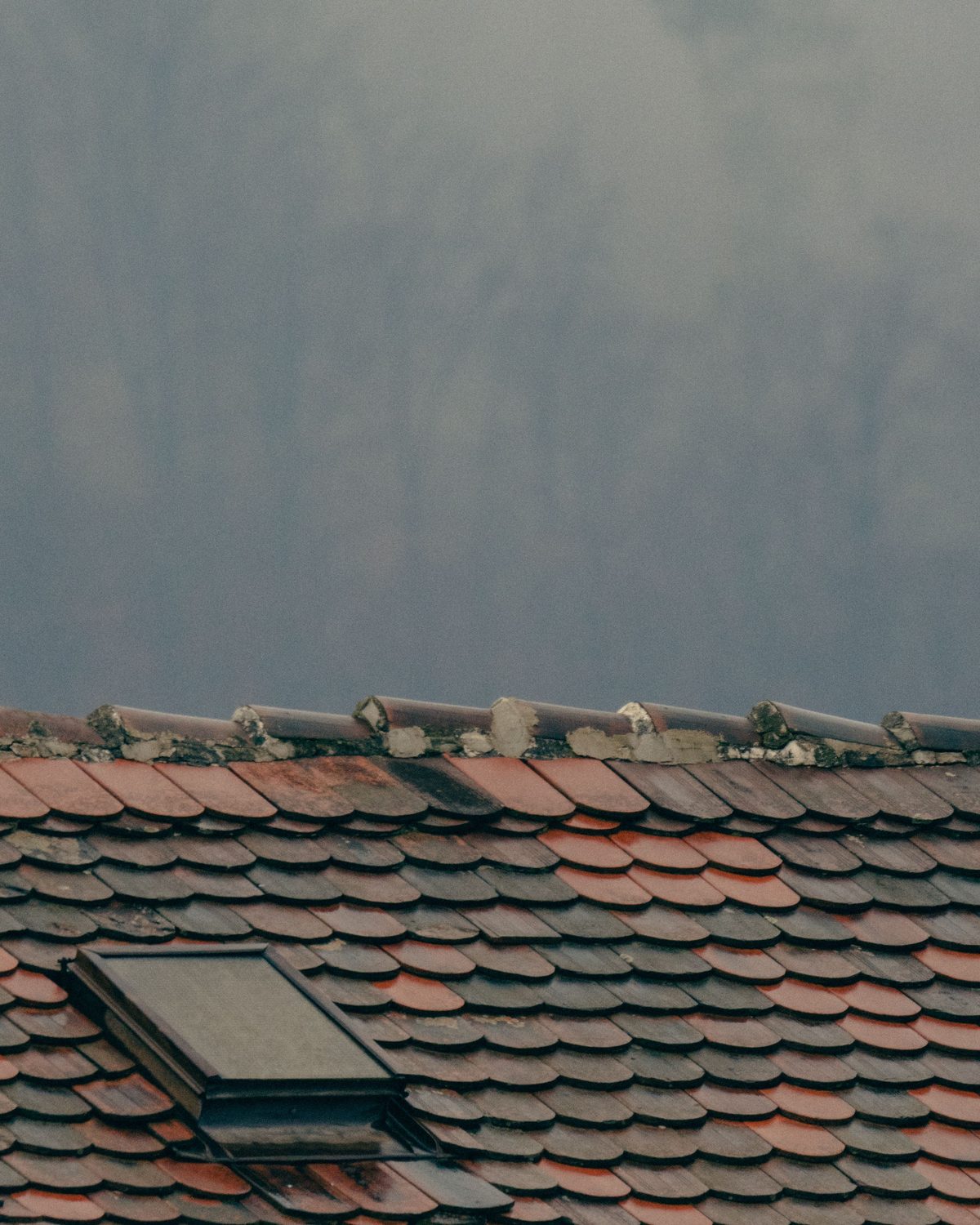
A roof on the Nevada shore of Lake Tahoe has almost nothing in common with a roof anywhere else we work. It carries weight for months, sheds what it cannot carry, and has to keep the building warm without warming itself. Nothing that decides a roof down in Southern Nevada decides one here, and an inspection looks for different things in a different order.
What is on the roofs at the lake
Houses, cabins and a great deal of property that is used part of the year, alongside lodging, restaurants, retail, offices, marina and service buildings, and a large amount of association and multifamily property. Much of it is timber framed, with steep pitches, dormers, deep overhangs and long valleys. Low slope sections sit among all of that, over entries, corridors, kitchens and mechanical rooms, usually tucked underneath a taller roof that sheds onto them.
Coverings are chosen for weight and for shedding rather than for what they reflect. Metal is common because it sheds, and where a roof sheds, snow retention has to be fastened through to the structure rather than to the panel alone. Two things matter more than the covering itself. The membrane at the eaves and in the valleys, because that is what keeps water out once ice has formed above it. And the assembly under the deck, because a roof that loses heat into its own snow cover is manufacturing the thing that breaks it.
What the inspection is looking for
Load, where it concentrates rather than as an average. Snow drifts against anything that stands up, and it arrives all at once on the lower roof when the roof above lets go, so we look hardest at those places rather than at the open field. Where something looks structural we say so, and that the opinion belongs to an engineer.
Ice damming next, at the eaves and valleys: whether there is continuous sealed membrane where the ice forms, and what the ice has already done to edge metal, gutters, fascia and the covering above them.
Then inside, which is half the visit here. The intake path clear at the eave, insulation continuous rather than stuffed into the overhang, air leaking upward from lights, hatches and fans, fans discharging into the roof space, damp or compressed insulation, stained sheathing, rusted fasteners and frost. Condensation and a leak leave similar marks and have completely different repairs, so the report separates them.
Then freeze and thaw, the slow one. Water works into a seam, a lap, a coping joint or a fastener hole, expands as it freezes and opens the gap a little. Details built on a bead of sealant lose that argument in the end.
A season that closes, and what buyers should do about it
Nothing gets inspected under snow, which is the one thing to plan around. The covering cannot be seen, the hazards on the roof are hidden, and clearing snow to look causes the damage we are usually called about later.
So a buyer at the lake should start earlier than a buyer in the valley. Book on the day the offer is accepted. Arrange interior and roof space access at the same time, because that part can be done whatever is on the roof. Ask the seller where ice forms, who clears the snow and with what, and whether stains have appeared at the top of any wall. If the roof cannot be seen in time, the report will say exactly which parts were not seen rather than rating them from the ground.
Permits go through Washoe or Douglas county depending on the address, and the Tahoe Regional Planning Agency has a say in work around the lake. That matters for repairs and for anything that changes how the building looks from outside, and those offices run on their own timetable rather than on yours.
Common questions
Can a roof at Lake Tahoe be inspected in the middle of winter?
Often not properly, and we would rather say so than take the booking and write around it. A roof under snow cannot be seen, and the snow hides every hazard up there as well.
- Skylights, curbs, low parapets, roof lights and the edge itself disappear
- Clearing snow to inspect causes damage of its own
- That damage is among the commonest things we see once it melts
- We will not write a rating for a covering nobody has looked at
What can still be done is worth more here than elsewhere. The eave line reads from the ground: ice, staining, torn edge metal, crushed gutters, snow retention that has moved. Inside, the roof space shows ventilation, air leakage, damp insulation, stained sheathing and frost. Where you need the covering itself, it waits.
Our closing date falls while the roof is still under snow. What are our options?
Three, and it helps to choose deliberately rather than discover the problem late. Take what can be done now, negotiate around the uncertainty, or start early enough that the choice never arises.
- What can be done now is the eave line and the roof space inside
- The report then states which parts of the roof were not seen
- That is a real document, but not a condition rating for the covering
- A credit, a holdback or a reinspection is for you and your agent
Alongside whichever you pick, get the history. Ask the seller where ice forms at the eaves and what has been done about it, who has been clearing snow and with what, whether stains have appeared at the top of any wall, and for invoices and warranty paperwork.
A stain keeps coming back at the top of an outside wall each winter. Is the roof leaking?
Usually not in the way people expect. That stain is the signature of ice damming, so a new covering on its own will do exactly the same thing next winter.
- Heat escaping the roof melts the snow lying on it
- The meltwater runs down and freezes over the cold overhang
- Water stands behind the ice and gets into laps made only to shed
- It shows inside at the wall head, so the covering gets blamed
- Inside, blocked eave intake, leaky fittings and fans venting into the roof
So the inspection goes after both halves: whether there is a continuous sealed membrane at the eaves and valleys and what the ice has done to edge metal and gutters, then where the heat comes from inside. Heat cable manages the symptom only, and condensation looks similar, so the report separates the two.
The house has a metal roof with snow guards on it. What do you check on that?
What holds them on, where the snow goes when it lets go, and what has already been hit. Snow retention has to be fastened into the structure rather than to the covering alone.
- That question sharpens where retention was added after the roof was built
- Then the ground below: entries, steps, walkways, decks, meters and lower roofs
- Buildings acquire things, and a deck under a shedding roof was never planned
- Then bent retention, scarred panel, deformed gutter and fasteners worked by drag
Repeated freezing and thawing matters too, because water finds a seam, a lap or a fastener hole, expands as it freezes and opens the gap slightly each time. Nothing fails on the first cycle, but details relying on a bead of sealant fail eventually, and the report names them.