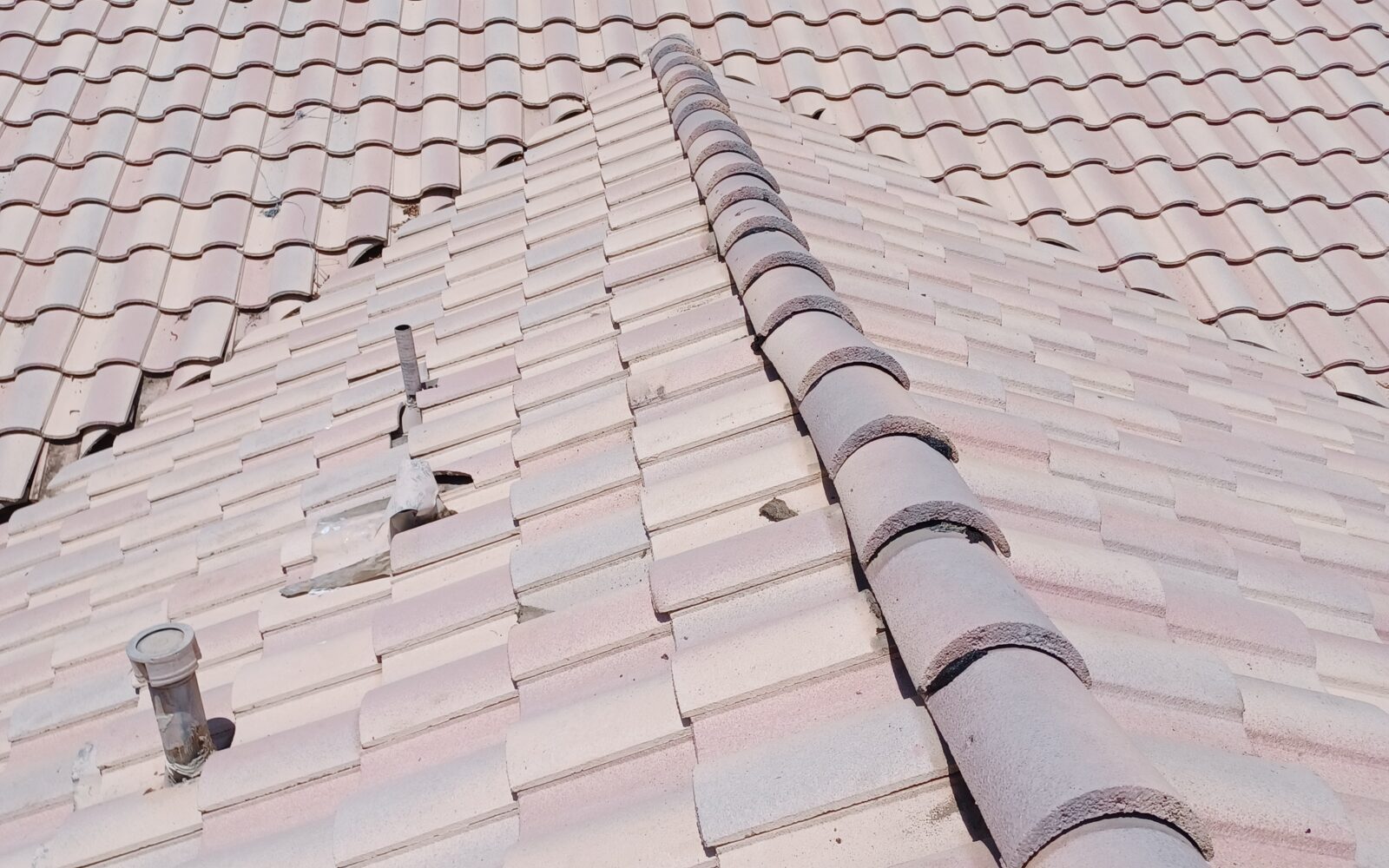
Concrete and clay tile can last a very long time. The underlayment beneath it usually does not, and that layer is what actually keeps water out. A PRS tile roof inspection judges both: the tile you can see, and the weather resisting layer you cannot.
That distinction is the reason tile roofs here are so often misread. A roof can present perfectly from the street, with clean lines and unbroken courses, while the material doing the waterproofing has gone brittle underneath. Owners discover it during a monsoon storm. Buyers discover it after closing. An inspection that lifts tiles and looks finds it while it is still a planned job rather than an emergency.
What we look for
- Cracked, broken or slipped tiles
- Underlayment that is brittle, torn or exposed to sun
- Valleys, flashings and ridges
- Debris that traps water under tiles
- Signs of past repairs that were not sealed properly
- Fixings that have corroded or released
- Movement at eaves, rakes and ridges, where wind uplift is greatest
Tile is armor, underlayment is waterproofing
It helps to think of a tile roof as two systems. The tile takes the sun, the hail and the wind, sheds most of the water and shades everything below it. The underlayment takes whatever gets past, runs it down to the eaves and keeps it out of the house.
Those two layers have very different life spans. Tile is mineral and weathers slowly. Underlayment is a manufactured sheet that ages from heat and sunlight, and on a valley roof it spends every summer in an oven. That is why tile roofs so rarely need new tile and so often need new underlayment.
It also explains where we look. Underlayment fails first where it is exposed or where it stays damp: at eaves and rakes, in valleys, under ridges, beneath any tile that is broken or out of place, and anywhere debris has packed in and held water after a storm.
Why it matters in the desert
Heat and sunlight age underlayment quickly, and monsoon storms test it hard. Finding worn underlayment early often means a targeted repair rather than an emergency one.
The pattern is specific to this climate. Long dry spells mean a compromised area produces no evidence at all, so nothing prompts anyone to look. Then a storm arrives with wind driving water uphill under the tiles, and the roof is asked to perform in exactly the condition nobody checked. Roofs here do not usually start leaking gently. They start leaking during one afternoon in July.
Tile is rarely the whole roof
Many valley houses combine tile with a flat or low slope section over a patio, an addition or a garage, often finished in foam or a membrane. Those sections age on a different timetable and fail in different ways, so we inspect them as a roof in their own right rather than as an afterthought. The questions there are drainage, whether water still sits a day after a storm, the condition of any coating, and whether the material beneath has taken water. Where tile meets a flat section there is a transition detail, and transitions are the first place to look when a leak appears near the join.
What the inspection tells you
| Finding | What it usually means |
|---|---|
| A few cracked tiles, sound underlayment | A tile replacement, and worth doing promptly before the layer beneath is exposed |
| Brittle underlayment at edges and valleys only | Targeted repair, with the rest of the roof monitored |
| Brittle underlayment wherever we look | Plan a lift and relay, where the tile is saved and the waterproofing renewed |
| Debris packed in valleys | Cleaning, plus a check of what the trapped water has already done |
| Flashing caulked over rather than reworked | A repair that was never a repair, and a likely leak source |
How to protect a tile roof between inspections
- Keep people off it. Every unnecessary trip cracks tiles.
- If equipment has to be serviced, ask the technician to use a known route and report anything they break.
- Clear debris from valleys and eaves, especially before the monsoon season.
- Replace broken tiles quickly rather than at the end of a list, because each one is a hole in the shade over your underlayment.
- Have the roof looked at after storms with strong wind.
Book
Pick a time on the booking form. See what a full residential inspection covers, what to check before buying a home with a tile roof, and confirm your address in the areas we serve.
Common questions
How long does underlayment last under a tile roof in Las Vegas?
Less than the tile above it, and less than the same underlayment would last in a mild climate. We will not quote a figure, because the honest answer depends on the product and the conditions.
- Heat is the main factor, since it spends its life in an oven
- Sunlight attacks whatever sits exposed at eaves, rakes, valleys and ridges
- Trapped debris keeps one area damp long after a storm
- Foot traffic that cracks tiles exposes the layer to sun and water
The useful question is not how many years it has but what condition it is in now, and an inspection answers that by looking under slipped and broken tiles at several points. Book one and ask for the actual condition at named locations rather than an estimate of service life.
Can individual tiles be replaced without redoing the whole roof?
Yes, and on a roof with sound underlayment that is exactly the right repair. Broken and slipped tiles are replaced individually, matched to the existing profile and color and fixed the way the rest was.
- The work is localized and protects the layer underneath
- Profiles change and colors weather, so an exact match is not always available
- A replacement tile can look obviously new for a while, which is cosmetic
- Reaching one tile means walking others, so it needs someone who knows where
What decides whether this is enough is the state of the underlayment. If it is sound, replacing tiles keeps the roof working. If it is brittle across the roof, tiles are cosmetic work over a problem that keeps producing leaks, so spend the money on the layer beneath.
What does it mean to lift and relay a tile roof?
It means removing the tiles, stacking the good ones, replacing the underlayment and any damaged flashing underneath, then reinstalling the same tiles with new ones filling the gaps.
- The tile is a reusable component and the waterproofing layer is renewed
- It suits a roof where the tile is decent but the underlayment is finished
- You keep the covering and gain new valleys and flashings beneath it
- Expect breakage on removal, so allow for a proportion of new tile
Ask three things before approving the work. What underlayment product is proposed and why, whether valleys, flashings and penetrations are renewed at the same time, since doing them later means lifting the tile twice, and what happens if the deck turns out to be damaged once the roof is open.
What causes tiles to crack or slip out of place?
Foot traffic is the most common cause by a wide margin. Anyone who steps in the middle of a tile rather than on its supported lower edge will crack it, often without noticing.
- Rooftop unit servicing, chimney cleaning and cable runs are usual culprits
- Wind, settlement and failed fixings account for most of the rest
- A slipped tile suggests a corroded fixing or a course never seated
- One slipped tile usually means there are others nearby
- Wind lifts at edges and ridges first, so storm damage clusters there
The consequence is not cosmetic. A cracked or displaced tile exposes the underlayment to direct sunlight and driven rain, which it was never designed to face. Replacing a handful of tiles promptly is a small job, so get them done before a summer and a storm season turn it into an underlayment project.
Can you inspect a tile roof without removing any tiles?
Much of it, yes, but not the part that matters most. Tiles, ridges, valleys, flashings and penetrations can be assessed visually, but the underlayment sits beneath the tile and has to be looked at directly.
- Debris, past repairs and obvious movement all show from above
- So we lift or look under tiles at several points around the roof
- Concentrating on eaves, rakes, valleys, ridges and anything already broken
- Anything disturbed is put back as it was
A handful of checked locations across different orientations gives a reliable picture, because the material was installed at once and ages together. A report that implies the underlayment was assessed when nobody looked under a tile is worse than none, so ask where we looked.